
DISCOVER MY COLLECTION OF ESSAYS WRITTEN AS PART OF MY DEGREE
This anthology delves deeply into the profound and transformative movements of Romanticism, Modernism and also sheds light on the intricate and innovative works of contemporary artists. These written works reflect my passion for art history, critical analysis and the evolving nature of art across different eras and movements.
Salvador Dalí’s The Persistence of Memory (1931) reflects key ideas from Sigmund Freud’s theories of the unconscious, dreams, latent and manifest content and the death drive. Its dreamlike imagery and distorted forms blur reality and illusion, inviting psychological interpretation. Drawing on Freud and critics such as Dawn Ades, this essay argues that Dalí adapts psychoanalytic ideas, using surrealism to provoke mystery and unsettle viewers while transforming Freudian concepts into his own visual language.
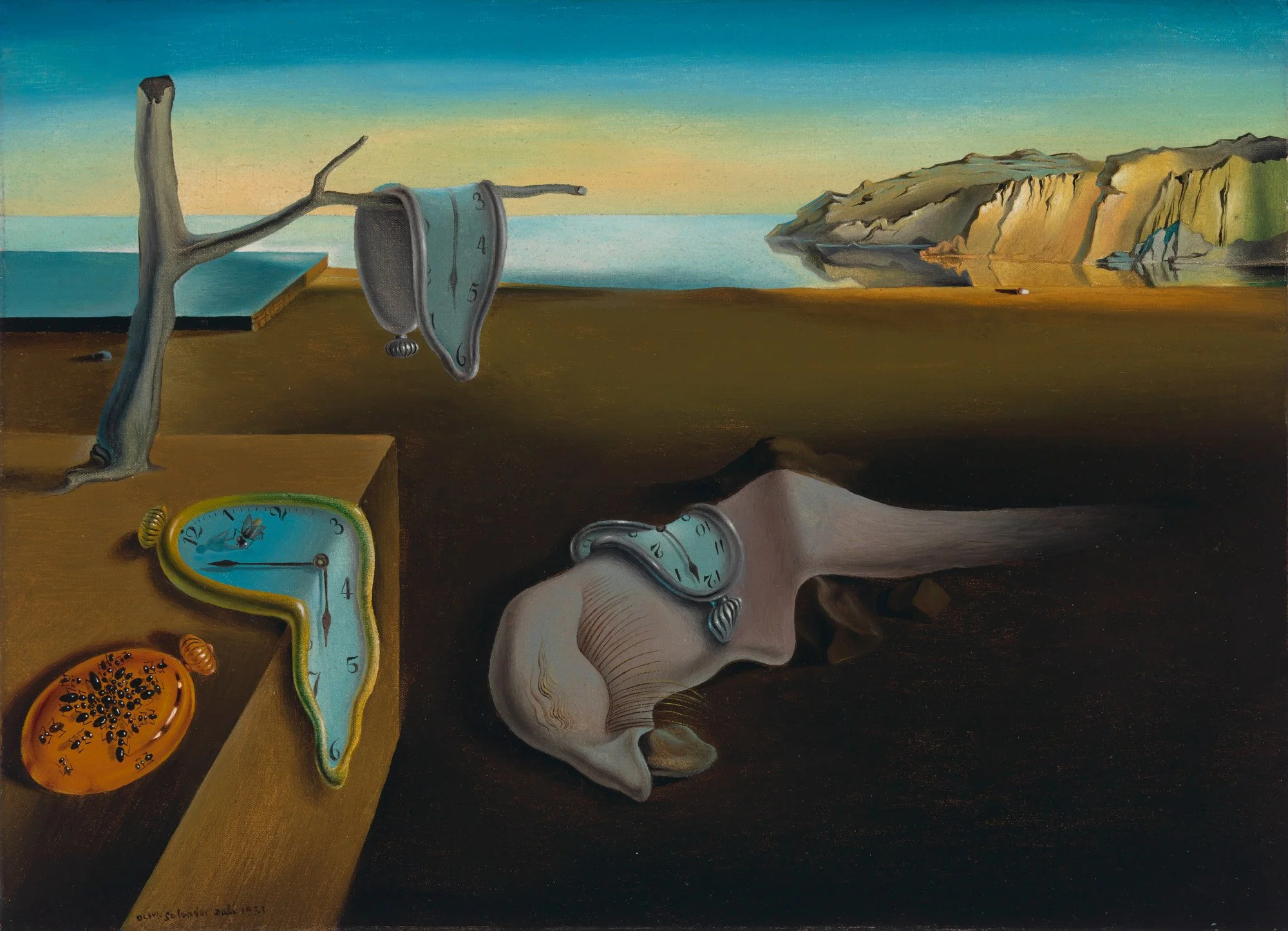
Salvador, D. The Persistence of Memory (1931), oil on canvas, 24cm x 33cm, Museum of Modern Art, New York
Marina Abramovic’s The Artist is Present (2010) redefined the relationship between artist and audience through sustained presence and interaction. Examined through Jean Baudrillard’s theory of simulacra, the work both challenges and reinforces simulation. Drawing on critics Amelia Jones and Shannon Jackson, this essay argues that Abramovic becomes a hyperreal icon, revealing how even intimate performance is shaped by media, institutional frameworks and representation.
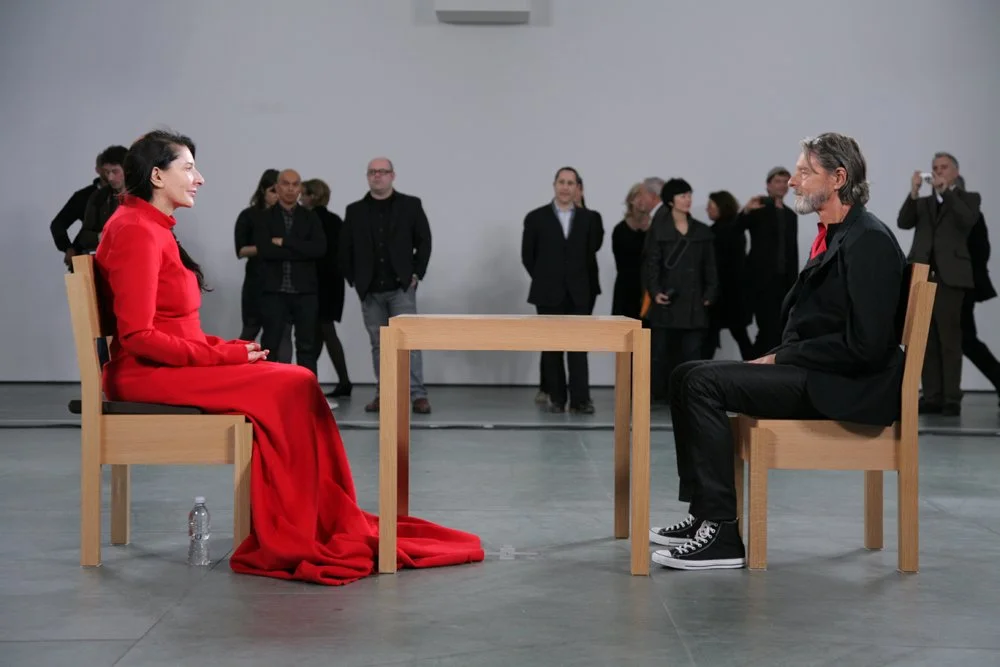
Abramovic, M 2010 The Artist is Present Museum of Modern Art, New York found at https://www.moma.org/audio/playlist/243/3133
Mark Rothko’s Seagram Murals (1958–1959) can be understood through Roland Barthes’ semiotic theories of the signifier, signified and the ‘death of the author’. This essay argues that Rothko’s abstract fields of colour resist fixed meanings, inviting viewers to create their own interpretations. By comparing the murals with Wassily Kandinsky’s symbolic abstraction and drawing on David Anfam’s art-historical analysis, the essay explores a broader shift in twentieth-century abstraction from structured visual language to open-ended, viewer-centred meaning. Ultimately, it contends that the significance of the Seagram Murals lies in their ability to generate emotional and interpretive possibilities rather than communicate a single authorial message.
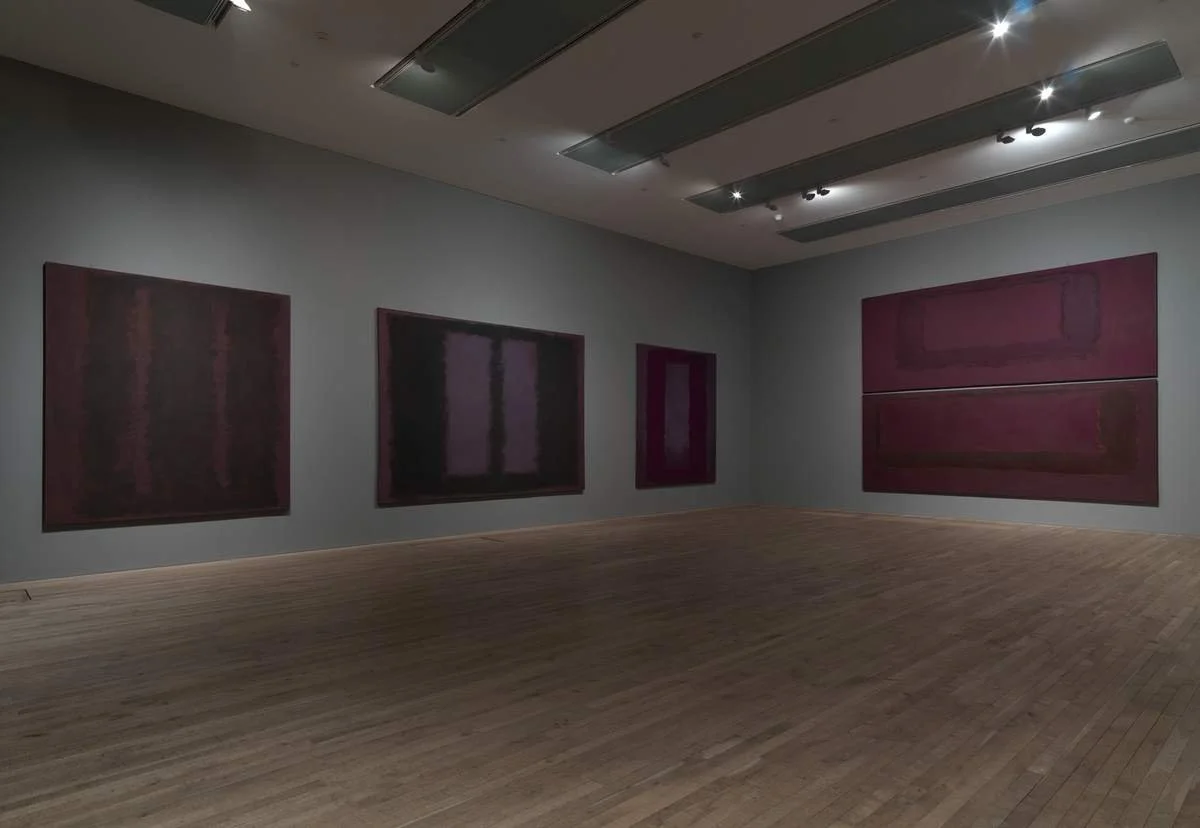
Mark Rothko, Red on Maroon (1958-1959), Oil on Canvas, 269 x 475.8cm, Tate Modern
Drawing on Edmund Burke’s theory of the sublime, this essay examines how Théodore Géricault’s The Raft of the Medusa (1818–1819) and Anselm Kiefer’s Morgenthau Plan (2012) evoke awe, terror and fascination. Through the writings of Werner Spies and Linda Nochlin, it explores how both artists use scale, composition and materiality to address human suffering, historical trauma and existential concerns. Comparing these works reveals how the sublime has evolved from Romantic representations of catastrophe to contemporary reflections on history, memory and environmental decline.

Theodore Gericault, 1839, The Raft of the Medusa, Oil on canvas, 490 x 716cm
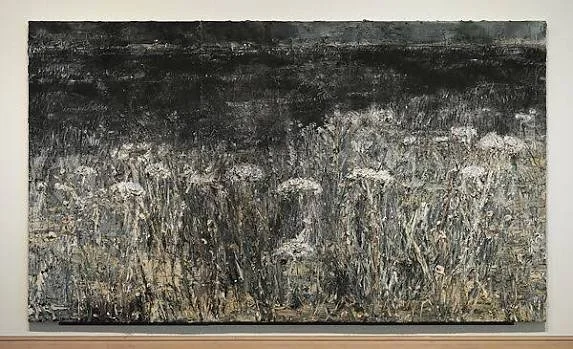
Anselm Kiefer, 2012, Morgenthau Plan, Acrylic, emulsion, oil, and shellac on inkjet prints mounted on canvas, 330 x 570 x 7.9cm, Metropolitan Museum of Art Bulletin